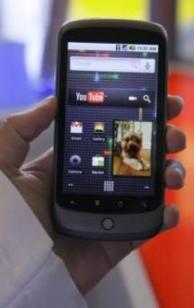
Google Music Could Wage War With Apple’s iTunes This Fall
43 comment(s) – last by muhahaaha.. on Jun 16 at 10:47 AM
There’s a storm brewing — Google Music is incoming and iTunes must brace itself for the impact
In
the world of online music, iTunes has long reigned
supreme. It enjoys such a dominant position that it is
currently the subject of a U.S.
Federal Trade Commission inquiry investigating whether it
abused smaller competitors like Amazon.com.
Apple’s days as
the only big player on the market may be numbered, though. At
Google’s I/O conference last month, the company previewed a web-based
service for developers. And
TechCrunch two
weeks ago discovered a
“Google Music” logo hosted by the company. Now CNET has
joined the buzz, citing numerous
industry sources as saying a launch of Google Music could come as
soon as the fall.
Google enjoys one critical advantage that
could allow its rebel service to ultimately crush Apple’s music
empire. That advantage is search.
Close to a billion
users visit Google every day, many of them searching for bands,
songs, and album titles. By tying these searches to
subscription-based streaming services and web-based digital downloads
akin to iTunes, many music executives believe that Google may promise
more sales than Apple.
Its rivals have tried to keep Google
out of the music business. After Lala and iLike teamed with
Google to offer streaming music with searches, Apple snatched up Lala
and Myspace acquired iLike and both companies shut down the
streaming.
The decision by Google to launch its own service is
like a dream come true for music labels. They are reportedly
fed up with Apple, which currently sells over one quarter of
the total music
sold (digital or otherwise). However, the current competition
— Amazon.com and Myspace Music — lack the sales to pose a serious
threat, which means that Apple gets to dictate whatever terms it
wants to the labels. That’s a situation that they’re not very
satisfied with.
Zahavah Levine, YouTube’s general counsel who
previously worked with RealNetworks’ Rhapsody music subscription
service, is reportedly working to cook up the new service.
YouTube has already enjoyed success in the music business thanks to
its plethora of music videos.
Google’s new service reportedly
will have many unique features. Among them will be the ability
to stream music from a library on your PC to your Android
smartphone. Google picked up a company called Simplify that
developed this technology. Google’s service is also reportedly
going to be cloud based — available exclusively as a web
application. While Apple is also reportedly working on a cloud
version of iTunes, Google reportedly wants to beat Cupertino to the
punch.
Apple iTunes 9.2 Released
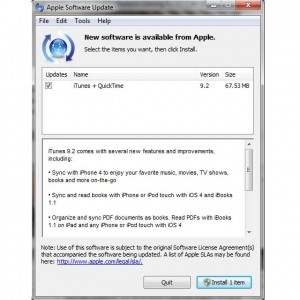
Apple yesterday published the final version of iTunes 9.2 . The download weighs 102MB and brings expected support for iPhone 4, and also enables a host of new features such as syncing books and sorting folders and apps for iOS 4.
Here is the complete changelog:
iTunes 9.2 comes with several new features and improvements, including:
Sync with iPhone 4 to enjoy your favorite music, movies, TV shows, books and more on-the-go
Sync and read books with iPhone or iPod touch with iOS 4 and iBooks 1.1
Organize and sync PDF documents as books. Read PDFs with iBooks 1.1 on iPad and any iPhone or iPod touch with iOS 4
Organize your apps on your iOS 4 home screens into folders using iTunes
Faster back-ups while syncing an iPhone or iPod touch with iOS 4
Album artwork improvements make artwork appear more quickly when exploring your library
Minor security fixes have also been implemented, including an update to the WebKit browser and a couple of Windows-specific fixes to prevent malware attacks.
The download is available for Mac OS X 10.4.11, 10.5 and 10.6; 32-and 64-bit versions are available for Windows.
Where should iTunes go next?
With the iPhone 4 and iOS 4 fast approaching, Apple released iTunes 9.2 on Wednesday to provide support for the new phone and OS. The only general improvement Apple lists is making album artwork appear more
quickly when exploring you iTunes library.
So what’s next? Whither iTunes 10? Traditionally, Apple holds a music-related event in the fall, announcing new iPod models,
and sometimes introducing new features in iTunes. We’re a few months away, but it’s worth speculating on what types of features
could improve the software. Here are some ideas for where iTunes can go.r”
New content types
As things stand now, iTunes has covered pretty much every type of digital content available. With music, videos, podcasts,
apps, audiobooks, e-books, and ringtones, there’s not much Apple could add.
Perhaps as the iPad grows, there will be one or two new libraries in the iTunes sidebar: Periodicals, or Newspapers and Magazines.
If this were to be the case, it would be interesting for iTunes not only to manage those files (as it manages e-books), but
also be able to display them. I’m not sure I’d want to read a “newspaper” on a Mac using iTunes–I’d probably just as soon
go to a Website–but having that capability might be useful at times.
And why not let users read e-books on their computers too? Amazon’s Kindle application for Mac already lets read books on your computer, plus it can sync your last-read locations across devices.
Streaming content
One popular speculation is that Apple is planning a music (and, perhaps, video) streaming service. This is based on the company’s
acquisition and closing of Lala, a cloud-based music streaming service. Will Apple add a new Streaming library, where users can add links to files they want
to listen to or view? Or will this be more of a two-way service, where you can upload your own music to Apple’s future data
center in North Carolina? (If it’s the latter, I wonder how long it would take me to upload my library of more than 300GB
of music?) But that wouldn’t be new content, just a new way of accessing existing stuff.
Improved file support
One thing a lot of iTunes users would love to see is support for more music and video formats. Take FLAC files, for example. While there are some ways to play FLAC files in iTunes, they’re not ideal. On the video side, there are a number of popular formats that iTunes should support: some of the codecs
used in AVI files, for example, or the popular MKV format used often for HD video files.
I’m not holding my breath for native support, however. Steve Jobs has pointed out that while such formats are perhaps “open” they are not necessarily unencumbered by submarine patents, or, simply, by patents
that haven’t been enforced yet. It’s very possible that patent owners are just waiting for some big company, like Apple, to
start using such formats to file lawsuits.
Yet Apple doesn’t have to add support itself, just allow third parties to do so–something QuickTime already enjoys. With
an add-on like Perian installed, you can play all sorts of audio and video file formats using QuickTime. Why can’t iTunes play those files too?
I suppose a lot of it has to do with syncing–iTunes only accepts files that you can copy and play on an iPod, iPhone, iPad,
or Apple TV (although some files will sync to some devices but not to others). But Apple could easy mark those files in some
way within iTunes. And even for those files iTunes can’t play, if it’s supposed to be your cental media library, it could
at least store them.

Apple to add HD Radio in future devices?
A recent Apple patent application could signal the company is looking to include an HD Radio feature in future iOS devices. An HD radio tuner would let devices scan radio broadcasts as well as do content-based searches for stations playing particular songs, genres, artists, and so on.
According to AppleInsider, Apple’s patent would bring the trademarked wireless radio format, HD Radio, owned by iBiquity to future generations of iPhones, iPads, and iPods. The application details the potential user experience, stating, “enhanced metadata and searching can provide the listener the ability to refine station choices without having to listen at length to any particular station, and further can facilitate tagging broadcast tracks for subsequent access and/or purchase.”
Similar tagging technology is already part of Apple’s iTunes Music strategy, appearing in HD Radio-enabled devices since they partnered with iBiquity in 2007. The latest generation iPod Nano, which has a built-in FM radio tuner, is also capable of tagging songs to be purchased later in iTunes.
Should Apple fully integrate the HD Radio functionality into iPhones and iPods, it would be just one more feature that Microsoft’s Zune could no longer claim as unique when compared with Apple’s portable devices. What do you think, should Apple include HD Radio in future iOS devices? Let us know in the comments.
Book Mark it-> del.icio.us | Reddit | Slashdot | Digg | Facebook | Technorati | Google | StumbleUpon | Window Live | Tailrank | Furl | Netscape | Yahoo | BlinkList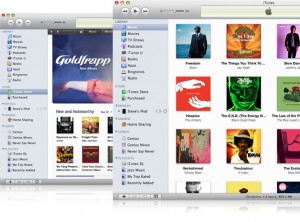
Apple releases iTunes 9.2
Apple releases iTunes 9.2
Posted by Dennis Sellers Jun 16, 2010 at 5:34pm
Apple has released iTunes 9.2, which includes support for iPhone 4, iOS 4, iBooks 1.1, and more. According to Apple’s release notes, it allows you to:
° Sync with iPhone 4—if you can get one, right?—to enjoy your music, movies, TV shows, books and more on-the-go;
° Sync and read books with an iPhone or iPod touch with iOS 4 and iBooks 1.1;
° Organize and sync PDF documents as books. Read PDFs with iBooks 1.1 on iPad and any iPhone or iPod touch with iOS 4;
° Organize your apps on your iOS 4 home screens into folders using iTunes;
° Perform faster back-ups while syncing an iPhone or iPod touch with iOS 4;
There are also album artwork improvements make artwork appear more quickly when exploring your library. iTunes 9.2 also includes some security fixes for the Windows version.
You can obtain it—on the Mac—via the Software Update component of the Systems Preferences app.
Book Mark it-> del.icio.us | Reddit | Slashdot | Digg | Facebook | Technorati | Google | StumbleUpon | Window Live | Tailrank | Furl | Netscape | Yahoo | BlinkList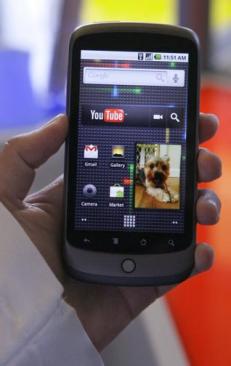
Will Google Kill iTunes?
Recs
2
- Share
Apple (Nasdaq: AAPL) had better watch out. The mighty iTunes juggernaut is about to face off against a new competitor called Google Music.
Google (Nasdaq: GOOG) is not the first big company to challenge Apple’s dominance of the music market, where iTunes now dispenses about 25% of all music sold, including CDs, 8-tracks, and wax cylinders. Amazon.com (Nasdaq: AMZN) is doing OK with its Amazon MP3 store, but it’s an uphill battle against a ruthless competitor with a stranglehold on the market.
Big G is pretty comfortable with fighting Apple from the underdog position, and has a unique set of weapons at its disposal. Android phones are set to eclipse iPhones in quarterly sales as we speak, and in total installed base as early as next year. That’s a testament to Google’s capacity to disrupt an established market with new products. Lessons learned from the Android campaign will apply neatly to this Google vs. Apple music challenge, too.
What’s going on?
Google is not looking to just copy iTunes and hope for the best. Instead, it looks like Google Music will be a cloud-based service based on technology from freshly acquired Simplify Media. If you never used Simplify Media, you can think of it as a way to listen to your own library of digital music tracks from anywhere. All you need is a Web browser with Flash from Adobe Systems (Nasdaq: ADBE) installed. (iPhone users have their own, special-purpose application to handle the lack of Flash.)
Simplify is dormant at the moment, not accepting new users or handing out software downloads. The whole service should come back to life under the Google banner later this year, according to CNET sources. Google showed a Web-based music service to guests at last month’s I/O Conference and promised an Android version of it for the Gingerbread/2.3 version of that platform.
If Google sticks to the twice-a-year release schedule we’ve seen in Android’s early days, that means we’re looking at something like a November release of the Android app. General availability for other platforms should not be far behind.
What’s at stake?
The symbiotic iPod/iTunes ecosystem contributed a staggering $12 billion of sales to Apple in 2009. iPods are still outselling iPhones, but only by the slimmest of margins; Apple is shifting its customers from single-purpose media players to all-purpose smartphones with astonishing efficiency.
Of that $12 billion market (or $19 billion if you count iPhones as music players), a new music store that doesn’t sell hardware is aiming for only $4 billion of the net sales. In a pure thought experiment, let’s assume that Google equals Apple’s music sales right now. The extra $4 billion of annual run-rate would represent a 16% boost to Google’s top line, while diversifying the company’s operations quite severely from the current addiction to online ad sales.
Big G is reaching into other non-AdWords revenue sources as well, including TV advertising and paid information services, but these efforts have yet to pay serious dividends. Getting Google Music up to speed quickly would serve nicely to show the market — analysts and all — that there really is more to Google than endless floods of banner and text ads. If distrust of an ad-only revenue model is keeping the stock price down, then we’re talking about a watershed moment in Google’s history.
What’s next?
Google Music could take off quicker than you might imagine. Warner Music Group (NYSE: WMG), Sony (NYSE: SNE), and the other music industry bigwigs would love to see somebody challenging Apple’s monolithic stature in the music market. They already have a working relationship with Google thanks to the way YouTube keeps music videos front and center. Oh, and unlike Amazon, Google has an Android army of music-playing gadgets at its disposal. Try using a Kindle to play MP3s, dude.
Nobody else can match a user-friendly music service in the clouds to an appropriate marketing channel the way Google can. Music fans who use the leading search service (that would be Google) to find out more about their favorite bands, albums, or songs now get pointed to mostly noncommercial resources like Pandora, Rhapsody, and News Corp. (NYSE: NWS) property iLike; Amazon MP3 and iTunes are nowhere to be found. Imagine funneling the purchasing power of that demographic right into Google Music, and you’re starting to see why I think this is a very big deal.
Google Music won’t kill iTunes outright; there are too many diehard Cupertino loyalists to ever achieve that. But check back in a year or two, and iTunes might finally have the serious rival that Amazon MP3 never quite was.
Please take our Motley Poll and then scroll down to the comments section to elaborate on your vote.
Take the Motley Poll
Will Google Music truly challenge iTunes?
Book Mark it-> del.icio.us | Reddit | Slashdot | Digg | Facebook | Technorati | Google | StumbleUpon | Window Live | Tailrank | Furl | Netscape | Yahoo | BlinkList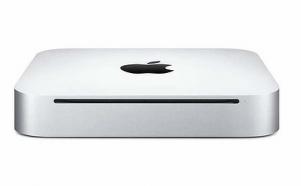
Apple Updates Mac Mini. Aluminium, HDMI, SD Card Slot
Apple have updated the Mac Mini. It now sports an aluminium (no, I am not going to spell it “aluminum”) enclosure, an HDMI port, an internal PSU (no power-brick!) and oddly, an SD card slot in the back. There’s also an access hole on the bottom to change the RAM easily.
The base speed has been bumped to 2.4 GHz, and default RAM to 2 GB. A 320 GB hard disk is now standard with option for 500 GB; The server model sports twin-500 GB drives (lacking the CD drive). Prices begin at $699 / £649 (!) / €799 for the standard model and $999 / £929 / €1’149 for the server model. A far cry from the days when the Mac Mini was a cheap PC (I paid £320 for my G4) but its success, even at these prices, is still grounded in its popularity as a quiet, well-balanced PC that has no real competitors of equal size for the power.(haters gonna hate)
Apple have increased the footprint of the device, whilst making the device shorter (the loss of the power brick however probably also makes for a lot less “real” volume). The previous generation Mac Mini was 2 inches tall (5 cm) and 6.5″ square (16.5 cm). The new Mac Mini is 7.7 inches square (19.7.cm) at 1.4″ tall (3.6cm)
The graphics chipset has been updated to a GeForce 320M, the newer version of the 9400M found in previous generations. Apple claim speed improvements of up to 2x with their usual vague charts. Expect benchmarks to start appearing as carputer users, modders and HTPC enthusiasts start getting their hands on the new models.
Speaking of which, the addition of an HDMI port seems almost un-Apple like as they have avoided on their main professional and consumer models.
It’s easy to connect Mac mini to the biggest screen in the house — your HDTV — courtesy of a built-in HDMI port. Plug in one HDMI cable and start enjoying content on your Mac mini in brilliant HD. Like films and TV programmes from iTunes, the Internet and your photo library. Like home movies, the Internet and your photo library. There’s also a handy control that lets you easily adjust the output on Mac mini to fill even the biggest HDTV screen. And when you just want to listen to music, you can play your entire iTunes collection through your home entertainment centre, or stream it to a set of speakers in any room via an AirPort Express Base Station.
However, the “main sell” of the new Mac Mini doesn’t seem to be as a HTPC, but as a regular computer. Are Apple still cautious about the TV market? Just as with the Apple TV, the new Mac Mini screams HTPC, but Apple don’t seem to be behind this idea with their full might, more “testing the waters” still. Their iTunes-centric view of media (as obvious from the quote above) is what’s keeping Apple behind here in my opinion. Google’s clear view to embrace the ‘Web as the big, messy shopping mall of choice is more in tune with a large part of the consumer market. Not that the MacMini can’t browse the web (it is after all a regular Mac OS X desktop machine), but that Apple see the web as the web, and HT functionality as iTunes–and ne’er the twain shall meet. Users in Europe want to use Spotify, and the Apple TV can’t do that (out of the box, for the average user), where the Mac Mini could, and where iTunes doesn’t compete.
What does this update imply for the Apple TV, I wonder. It’s buried under the iPod section on the store, out of harms way.
Book Mark it-> del.icio.us | Reddit | Slashdot | Digg | Facebook | Technorati | Google | StumbleUpon | Window Live | Tailrank | Furl | Netscape | Yahoo | BlinkList
Apple Debuts iPhone App Called Apple Store
Want to pre-order the new iPhone 4 or buy a new Mac mini on your iPhone? Starting Tuesday, there is an app for that. Apple debuted its own iPhone app called Apple Store that allows you to buy Apple hardware and other goodies via your iPhone or iPad.
Just as iTunes lets you buy apps, music, and movies via your iPhone, the Apple Store app allows you to brows before you buy iPhones, iPads, Macs, or any other Apple product your credit card can withstand. In a less-than-amazing coincidence, Tuesday is also the day that pre-orders for iPhone 4 are being taken.
Even More Handy
The free Apple Store app also helps you find nearby Apple stores, in case you want to shop in person. It’s tied into location services, so once you give your permission to be found, it will point you toward the nearest Apple store. From there you can make reservations to speak with an Apple Genius or sign up for an event like a workshop.
Five navigation buttons sit at the bottom: Featured, Products, Stores, Search and Cart. One bonus: many products have a “Q&A” section, in which folks ask questions about the product, and others answer.
The Apple Store app appears to make shopping for Apple products easy and painless. There’s nothing innovative or ground-breaking about it, but it offers a more direct mobile link to Apple merchandise compared to other third-party Websites.
Stay tuned for PCWorld’s official review of the Apple Store within the App Guide section of PCWorld.com.
Book Mark it-> del.icio.us | Reddit | Slashdot | Digg | Facebook | Technorati | Google | StumbleUpon | Window Live | Tailrank | Furl | Netscape | Yahoo | BlinkList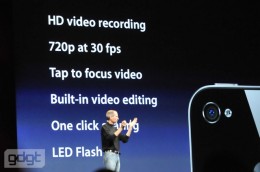
Switched On: An ‘i’ for imaging
When the original iPhone was first launched, its camera ranked among its least competitive features. While the face of Apple’s product broke ground for how it reacted to touch, its eye into the world was wanting. It could capture only two megapixels, lacked autofocus, a flash, or digital zoom, and had no support for video capture. It seemed as though Apple had somehow felt obliged to put in a camera, a feature the company would leave off the iPod touch and iPad. The 3GS bumped the resolution to three megapixels and added in video capture that even included trimming capabilities, but Apple’s heart still didn’t seem very into the iPhone as a digital imaging device.
That’s changed with iPhone 4. While its five-megapixel camera lags behind the eight-megapixel cameras on devices such as the Droid Incredible and HTC EVO 4G in terms of raw resolution, and it includes just one LED flash bulbs as opposed to two on the EVO 4G, Apple’s inclusion of a backlight sensor has aided the product’s low-light capture, and the included software makes use of the cameras in innovative ways.
But as is often the case with Apple, the hardware is only part of the story. iMovie and FaceTime show that Cupertino seeks to push the envelope of what can be done in real-time using the iPhone’s cameras, as well as what can be done video after it’s been captured. Using iMovie for iPhone, one will be able to create a reasonably polished multimedia memento that wraps HD video, five-megapixel stills and a soundtrack in high-quality titles and transitions. You’ll be able to finish the vacation video before the vacation is even over.
During his WWDC keynote, Steve Jobs said it took 18 months to develop iMovie for iPhone. That Apple is now lavishing attention on video functionality it practically ignored before shows that the iPhone is expanding far beyond the content consumption role — a role many have been tempted to pigeonhole smartphones and slate devices in general. It also fans the flames of opinion that Apple is turning iOS into an eventual replacement for Mac OS. iMovie was the first of the iLife applications, and of course the iWork suite has already been ported to iOS. Apple’s imaging moves also show some of the strength that Apple is building in its iCosystem. It would be trivial to create a version of iMovie optimized for the iPad, and getting videos from the iPhone to iPad is a simple exercise with the (currently rare) iPad camera connector. The next step is a simpler path to the television that may be facilitated by a future version of Apple TV.
Of course, these video vindications are currently limited to the iPhone. The next test of Apple’s commitment to developing its handheld platforms into robust digital imaging devices will likely happen this fall as Apple refreshes the iPod touch. Many have long speculated that that device — previously described as not needing “new stuff” by Jobs — was destined to include a camera. But now the indications are stronger than ever that Apple will imbue its music player-turned-mobile platform into a carrier-free vehicle for bridging the space of face-to-face communications and the time between capturing video and editing it.
Ross Rubin is executive director of industry analysis for consumer technology at market research and analysis firm The NPD Group. Views expressed in Switched On are his own.
Book Mark it-> del.icio.us | Reddit | Slashdot | Digg | Facebook | Technorati | Google | StumbleUpon | Window Live | Tailrank | Furl | Netscape | Yahoo | BlinkList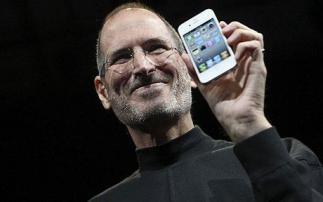
Quick Tip: Sharing iPhone and iPad Apps On the Go
Suddenly you find yourself with some extra time on your hands and your spouse, child, or parent tells you about a great app. If this person is a member of your household, they can share the app with you via iTunes sharing. However, what if you are on the road with your spouse or children and want to try out one of their apps, or share one of your own? Apple provides an easy way to do this.
Apple allows you to download an app you’ve already purchased from the App Store. This is perfect for when you purchase an app and realize the app isn’t synced to the iPhone. Simply “repurchase” your app and Apple will let you know that you already purchased it and there won’t be any charge. Thus you can reinstall any app you already purchased while on the road without any need to re-sync. Essentially you share apps over the air between your device and your synced iTunes.
Sharing Apps
Sharing apps with a family member works very much the same way. To add your spouse or significant other’s app to your iPhone, iPad, or iPod touch, go to Settings, then Store. Choose Sign Out to sign out of your personal account.
Next, sign into the other person’s account. They’ll need to either give your their password or type it in.
Now that they are signed in to the App Store on your phone, they can download any app they’ve purchased and you will then be able to use that app on your phone. In addition to app sharing between you and your spouse, this is a great way that you can purchase apps for a child’s iPod touch, and then share only the apps you wish with that child. This might be much safer than giving them their own Apple Store account and your credit card! Keep in mind that you won’t be able to update your apps and the other person’s apps at the same time. To update their apps you’ll need to sign in as them and do updates separately.
Karma Violation?
Does this violate any rules, either Apple’s or karma’s? I don’t think so. Apple made the conscious decision to enable sharing between members of a household in iTunes, allowing family members to listen to each other’s music and watch each other’s videos. Household app sharing is explicitly allowed this same way. Apple is trusting its users to do the right thing with household and family app sharing, and we should return that favor by not abusing the system.
Book Mark it-> del.icio.us | Reddit | Slashdot | Digg | Facebook | Technorati | Google | StumbleUpon | Window Live | Tailrank | Furl | Netscape | Yahoo | BlinkList
Apple Did Announce a New Version of iTunes Yesterday
Given the breadth of speculation that tends to cloud the lead up to an Apple keynote, there’s bound to be some feelings of disappointment once the smoke finally clears. Among the bigger let downs was no announcement of cloud-based iTunes integration, which some were predicting, given Apple’s recent shuttering of the Lala music service.
And while Jobs didn’t talk all that much about iTunes specifically (this wasn’t, after all, a music event–those tend to occur in August/September), he did unveil some new features for the service like iBooks for the iPhone and PDF syncing.
Those features will be a part of iTunes 9.2, a relatively modest update to the service that should launch around the same time as iOS 4 for the iPhone.
Book Mark it-> del.icio.us | Reddit | Slashdot | Digg | Facebook | Technorati | Google | StumbleUpon | Window Live | Tailrank | Furl | Netscape | Yahoo | BlinkList
iPhone 4 Looks Great But Won’t Stop Android (AAPL, GOOG)
Apple’s new iPhone 4, unveiled moments ago, is easily Apple’s best yet. But it won’t stop Google’s surging Android operating system, and doesn’t address some of Android’s new strengths that are becoming weaknesses for Apple.
This is important because Google has quickly become Apple’s archrival in the mobile industry.
And while Google is quickly updating Android to add neat features that Apple doesn’t have, Apple isn’t countering those features. It’s growing in a different direction.
First, Apple’s new iPhone 4 is super impressive. The new display and camera look fantastic, and we’re excited to try out the new FaceTime video calling feature. The new hardware is sexy, and the extended battery life is going to be very helpful. In short: Steve Jobs convinced us today to stick with a new iPhone for two more years and not buy an Android device.
But what Jobs didn’t do is convince us that Apple is doing addressing the “cloud” improvements that Google has made to Android, which are looking increasingly nifty.
- We’re talking about those new Android “Froyo” features that let you zip web pages and map directions from your computer’s browser over to Android phones.
- We’re talking about streaming music from your computer to Android phones. Isn’t iTunes supposed to be Apple’s strength?
- We’re talking about the Google calendar/mail sync stuff that Android users drool about to us all the time, which Apple could have replicated by making a lite version of MobileMe free to iPhone buyers.
It’s not that Apple isn’t keeping up feature-for-feature with Google — it’s that Apple doesn’t even seem to be THINKING about this stuff.
Instead, Apple focused today’s announcements on new hardware and software features, such as a new iMovie app for editing video, FaceTime video calling, a front-facing camera, new screen technology, iBooks, and iAds. These are fine features, and in many ways, Apple is leading where Google is nowhere close.
Perhaps the stuff Apple is working on will prove to be vastly more important for selling phones and iPod touches and iPads than the stuff Google is working on. Perhaps people aren’t buying Android because of Google’s innovative cloud services, but just because it’s “good enough” and available on all the carriers Apple doesn’t yet work with.
Maybe the cloud is overrated. Apple had better hope so, at least until it has an answer.
The new iPhone 4, with its new AT&T data plans starting at $15/month, is going to sell like hotcakes this summer, and Apple will have another hit on its hands. But look out for Android. Google is doing very cool things that Apple isn’t countering, and it has stronger distribution in the U.S. than Apple does.
Steve Jobs made the iPhone better today, but he didn’t make Android worse.
Don’t miss: Here’s All The Big News Apple Just Announced and Big Beautiful Pictures Of Apple’s iPhone 4
Join the conversation about this story »
See Also:
- Big Beautiful Pictures Of Apple’s New iPhone
- Here’s All The Big News Apple Just Announced
- What People Are Saying About The iPhone 4
WWDC 2010: 10 Things To Watch For
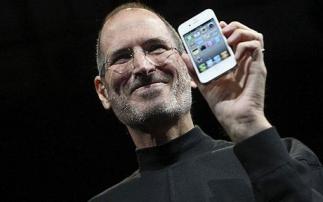
Thanks to Gizmodo, we know one thing Apple’s Steve Jobs will pull out of his pocket at Monday’s Worldwide Developers Conference: a next-gen iPhone. But what else is up Jobs’ sleeve? A cloud-based iTunes, Safari 5, iChat for iPhone, or a Mac OS update?
Here are ten things to watch for during Jobs’ speech to kickoff Apple’s Worldwide Developers Conference on Monday.
iPhone
Every year since the iPhone’s inception Apple has unveiled a new device during WWDC, and this year should be no exception. Heck, it’s even become a punchline that you can expect a new iPhone to show up onstage somewhere around 9:42 a.m. Pacific time. And this year, thanks to Gizmodo’s well-publicized purchase of a lost iPhone prototype left in a bar, we even have a pretty good idea of what to expect. The new iPhone is widely expected to have a higher-resolution display (rumored to be 960 by 640), front- and rear-facing cameras, larger battery, a second mic for noise cancellation and a new, square-shaped body instead of the more rounded design previous iPhones have had.
What we still don’t know is what the device’s name will be? Will the new iPhone use a custom-made Apple processor, and will the new iPhone have more storage than the current 32GB iPhone 3GS?
Safari 5 and HTML 5
Recent rumors suggest that Apple may unveil the next version of the Safari Web browser during WWDC. Safari 5 is rumored to have a new JavaScript engine that is 25 percent faster than Safari 4, a Bing search option, smarter address field similar to Firefox’s Awesome Bar and increased HTML 5 support. The new version of Safari is also rumored to have a new RSS reader/Instapaper clone called Safari Reader that will let you “view articles on the web in a single, clutter free page.”
You can also expect Jobs to make a big deal about the wonders of HTML 5 as Apple works to cement its perceived opposition to proprietary Web technologies like Adobe Flash. On Friday, Apple launched a new HTML 5 showcase that lets you try out some of the HTML 5 features the current version of Safari has, including photo transitions, improved font displays, and improved audio and video support. Expect more of the same if HTML 5 comes up during the keynote.
Mac OS X
A lot has been made out of the fact that Apple dropped the Mac category from its annual design awards presented during WWDC. This has led to some to suspect that Apple may be ignoring its PC operating system as the company turns instead to the iPhone OS and devices like the iPhone, iPad, and iPod Touch. Even the tagline for this year’s WWDC — the center of the app universe — doesn’t leave much room for OS X. It’s true that Apple is definitely iPhone OS-focused right now, but we might see a mention of Mac OS X 10.6.4, the next OS X update, since it is rumored to be packaged with the rumored Safari 5 update.
iPhone OS 4.0
Apple already gave us a look at the next iteration of the iPhone OS earlier this year. But Apple always holds back a few surprises for WWDC, and the company should also announce a launch date for iPhone OS 4.0. Apple should also reveal more details about the iPhone Game Center, which adds some social features like leaderboards and friend challenges to iPhone games.
iChat for iPhone
There have already been references to iChat found inside recent developer releases of iPhone OS 4.0, and the new iPhone’s expected front-facing camera would make iChat a no-brainer. Even more interesting, though, will be to see whether Apple gives developers access to the new camera feature as well. That would allow third-party applications such as Skype to offer video calling on Apple’s new device.
Multitouch trackpad
Image Credit: EngadgetA fresh rumor from Engadget suggests Apple may be releasing a multitouch trackpad, similar to Apple’s laptop touchpads, that connects wirelessly to desktop Macs. I wouldn’t expect Jobs to mention this during the keynote unless it’s tied to a refresh of some of Apple’s desktop computers.
AT&T Deathwatch
Predicting the day when Steve Jobs will finally announce the end of Apple’s exclusive arrangement with Apple has become something of a pastime for Apple watchers. Rumors of a Verizon iPhone are increasing, but there are also moves from AT&T that may suggest the company is getting ready for the end of its reign as the exclusive iPhone carrier in the United States.
First, there’s the new AT&T tiered data plan that goes into effect for new iPhone and iPad users on Monday. Some figure that AT&T has phased out its unlimited data plan because its exclusivity contract with Apple is ending. Therefore, the carrier is no longer beholden to Apple’s demands to offer iPhone users all-you-can-eat data. Interesting theory, but that’s a bit of a stretch.
A report from MacRumors says that AT&T has bumped up the upgrade eligibility date for some iPhone users. This could entice some current iPhone owners to ditch their old devices for the new iPhone expected to be announced today. Perhaps AT&T is doing this in an effort to attract as many new iPhone users as it can before its exclusivity contract ends.
Apple TV and Mac Mini refreshes
There are also several rumors suggesting that Apple may offer some hardware upgrades today. Apple TV is rumored to be getting an update that will include the ability to play 1080p high-definition video, 16GB flash storage, as well as online storage space for your iTunes purchases. There are also rumors about a Mac Mini refresh from Apple Insider, but it’s not clear what a Mac Mini upgrade would entail.
iTunes in the cloud
Apple purchased the online music service Lala in December, and last Monday Apple finally shut down Lala’s Website. The shutdown of Lala so close to WWDC has fueled further speculation that a cloud-based iTunes announcement is imminent.
Mobile Me
Another rumor is that Apple may unveil a free version of its MobileMe service during WWDC. Apple’s Mobile Me service primarily syncs your e-mail, contacts, and calendars across multiple desktops, mobile devices and the Web for $99 a year. MobileMe also offers you 20GB of online storage through iDisk, a Web gallery for your photos and the Find My iPhone and Remote Wipe data protection and antitheft features.
However, with the exception of Find My iPhone and Remote Wipe, you can get ever other MobileMe feature for free with other services. Google offers contact, calendar, and e-mail sync for free using Exchange Active Sync, and the new version of Hotmail being released this summer is expected to offer free syncing as well. Microsoft offers 25GB of free online storage through SkyDrive, and there are any number of free online photo storage services including Picasa, Flickr and Windows Live.
Given that every other tech company offers these services at no cost, a basic free version of MobileMe would make a lot of sense.
So there you have it — ten things to watch out for during Monday’s WWDC keynote starting at 10 a.m. Pacific. Be sure to check in with PCWorld for live blog coverage of the keynote, as well as tons of analysis, punditry and news surrounding Apple’s keynote throughout the day.
Connect with Ian on Twitter (@ianpaul).
Book Mark it-> del.icio.us | Reddit | Slashdot | Digg | Facebook | Technorati | Google | StumbleUpon | Window Live | Tailrank | Furl | Netscape | Yahoo | BlinkList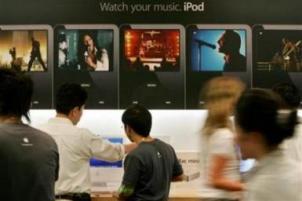
DoJ to examine Apple’s iTunes business practices
The Justice Department is looking at Apple’s iTunes business, according to the New York Times.
Apple is the largest music retailer in the US, with over a quarter of the market and two-thirds of the online music business.
The inquiry will center around whether the company has used its clout to try and stop music labels from giving exclusive content to Amazon.
It was reported in March that Amazon was asking labels to give it exclusive access to certain songs for their first day of release. In exchange, it offered to include those songs in an ‘MP3 Daily Deal’ promotion.
But the investigation is likely to have a broader remit, looking at all aspects of Apple’s marketing practices.
The probe is in its early stages, says the NYT, with investigators talking to recording labels and other online music retailers. It may not result in a formal inquiry.
Apple’s already believed to be the subject of one antitrust investigation. The Justice Department and Federal Trade Commission are said to be looking into Apple’s decision to ban developers from using Flash.
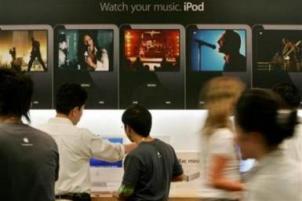
Apple iTunes could face anti-trust issues
Apple’s iTunes juggernaut may be facing some anti-trust issues from the U.S. Justice Department due to its tight grip over the digital music market.
Apple (NSDQ: AAPL) is now the biggest music store in the world, surpassing even Wal-Mart, but the government is in the beginning stages of seeing if the company has used its market position in unfair ways. For example, Apple allegedly told music labels it won’t receive strong iTunes promotion if it also uses rival Amazon’s “Deal of the Day,” which is a promotion that sells albums and songs for really cheap prices.
There’s no word on when, or if, the hammer will come down on Apple but the company may almost be suffering from being too successful. A decade ago, Apple wasn’t in a great spot even with Steve Jobs returning. It then brought out the iPod, iTunes and, eventually, the iPhone, and these all helped spur a meteoric turnaround.
The media software has become the backbone of Apple’s products and I believe it is a major advantage for Apple in the mobile space that is not often spoken about. The App Store probably wouldn’t have been such a success if Apple users weren’t conditioned to quickly and easily purchase programs with a few clicks. While rival Google (NSDQ: GOOG) is set to do some amazing things with the Android Market, it’s tough to build from scratch and we know that Google’s market is still not that good in terms of searching and for discovering new apps.
Android may actually help Apple escape some governmental scrutiny, as Amazon has seen its music store grow thanks to that little, green robot. While iTunes still has about 70% of the market, Amazon’s MP3 store has tripled its market share (from 4% to 12%) in the last two years and if it continues to grow with Android, it could provide a legitimate counterbalance to Apple’s iTunes.
Via BusinessWeek
Book Mark it-> del.icio.us | Reddit | Slashdot | Digg | Facebook | Technorati | Google | StumbleUpon | Window Live | Tailrank | Furl | Netscape | Yahoo | BlinkList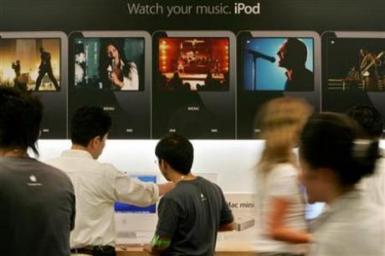
Face The Music? Report Cites Fed Investigation Into Apple iTunes
Apple may have a whopper of a digital music problem on its hands, thanks to new reports suggesting the U.S. Department of Justice is investigating Apple and its iTunes music service for possible antitrust violations. Apple, which according to researchers commands a 70 percent market share with iTunes for digital music sales, is said to be under investigation for pressuring music labels to favor Apple for music distribution.
The New York Times was first to report late Tuesday that the Department of Justice is examining how aggressively Apple sells digital music.
According to the Times, which quoted “several people briefed on the conversations,” the Department of Justice’s antitrust investigators are particularly interested in whether Apple used its market sway to try to prevent Amazon.com from selling new music from hot artists ahead of the music’s wide release date as part of an Amazon.com promotion.
Another report from The Wall Street Journal confirmed the investigation detailed in the Times’ story, although neither Apple nor Amazon nor the Department of Justice has publicly commented, and did not respond immediately to a request for comment from CRN.
A Billboard magazine report in early March suggested Amazon was inquiring to music labels about a promotion called “MP3 Daily Deal” in which Amazon.com was requesting to sell new songs from hot artists on its Web site a day before that new music went on general sale. Billboard also reported that Apple was pressuring music labels to deny Amazon.com that access.
Apple is already said to be in the Department of Justice’s crosshairs. According to reports, the Department of Justice and the Federal Trade Commission are investigating Apple’s recent decision to ban cross-platform compilers — such as one including Adobe Flash Professional CS5 — for programmers building for iPhone, iPod Touch and iPad.
Book Mark it-> del.icio.us | Reddit | Slashdot | Digg | Facebook | Technorati | Google | StumbleUpon | Window Live | Tailrank | Furl | Netscape | Yahoo | BlinkList
Led Zeppelin. A name that’s probably been scrawled onto notebooks, carved into park benches, and spray-painted on walls more than any other. The name came from Who drummer Keith Moon’s idea that the group would sink like a lead balloon. Indeed they would create something heavy, but it wouldn’t sink – it would set the model for the ultimate rock band in the years to follow. Guitarist Jimmy Page, bassist John Paul Jones, and singer Robert Plant, and drummer John Bonham united to become the most deified rock band of the ’70s, embodying excess, reinventing FM radio, and writing music that made you want to move your feet, shake your fists, bang your head, and basically act like a rock ‘n’ roll lunatic.
For the first time, Led Zeppelin is now available for download on iTunes! The complete Led Zeppelin remastered set is available to download for $99.99!
Book Mark it-> del.icio.us | Reddit | Slashdot | Digg | Facebook | Technorati | Google | StumbleUpon | Window Live | Tailrank | Furl | Netscape | Yahoo | BlinkListIpods have been around a while now, I’m sure you are aware of that, but did you know the first ones were released six years ago? That’s right, 2001 saw the first appearance of the little white marvel, and there have been many different permutations from there. Check out this lesson on Ipod history to find some surprising facts.
Ipod:Generation 1-
While they may have been hugely capable and effective at the time, the specs of the first generation Ipods pale in comparison with their younger siblings these days. The first ones had a 5GB memory as standard, which held 1000 songs more or less, and is what prompted the famous Apple slogan, “1000 Songs In Your Pocket”. Still, the slogan and the Ipods themselves seemed popular enough, even though the Itunes software was only available to Mac users at that point. Apple had set quite a precedent with their little white boxes, only time would tell if they could capitalize and expand on that.
Ipod:Generation 2-
The second generation is sometimes known as generation 1.5 due to the fact that the Ipod remained unchanged in the majority. The only real differences between these ones and the originals were that the thumb scrolling wheel became more like the mousepads you see on modern notebooks, instead of an actual wheel that clicked around, and they now supported the PC as a platform from which to transfer songs and media. This would prove to be a major shot in the arm, as it opened the Ipod up to a whole new market…
Ipod:Generation 3-
This generation is the one largely responsible for the massive Ipod culture we have in the world today. The third generation refined the PC support, and for the first time made it possible to access a PC from a commonly available USB cable, instead of the previously used Firewire interface. Finally, Ipods were accessible to everyman, and without the need for specialist equipment or interfaces. It’s also worth noting that the 3rd generation was the first to offer truly huge storage, with some of them weighing in at 20GB.
Ipod:Generation 4-
By this point Apple seemed very aware of the controlling point they had of the market, and from here it has seemed like we get a new permutation or variation on the Ipod theme every year or even every few months.
The phrase “1000 songs in your pocket” became ever more accurate with the release of the Ipod mini, and later the Ipod nano, both of which were absolutely tiny-the Nano being less than a quarter inch thick and still boasting a 2gb storage capacity. Not only was it revolutionary in size, it was also the first Ipod to feature a real calendar/address book, and also games you could play whilst listening to your music.
Ipod:Generation 5-
Generation 5 heralded the arrival of the Ipod Video, which does exactly what you imagine-stores and plays back high quality video on the go. Boasting a larger screen and huge storage ability at 30gb, the video was surely the way to go for anyone that wanted to go beyond music.
Ipod:Generation 6
This most recent development in the Ipod evolutionary chain is truly the most impressive. The latest Ipod Nano has been released, boasting storage capacities of either 4gb or 8gb, and at less than a quarter inch thick, an inch and a half wide and two inches tall, this is truly impressive-especially if you take into account that it’s the first truly small Ipod to offer video playback as standard and has in built graphically intensive games for the user to play. An amazing development and true technological marvel.
It seems the only question left that we can ask is where will they go from here?
Book Mark it-> del.icio.us | Reddit | Slashdot | Digg | Facebook | Technorati | Google | StumbleUpon | Window Live | Tailrank | Furl | Netscape | Yahoo | BlinkList